Treatment guide
Dental Implants: Treatment Steps, Benefits and Risks
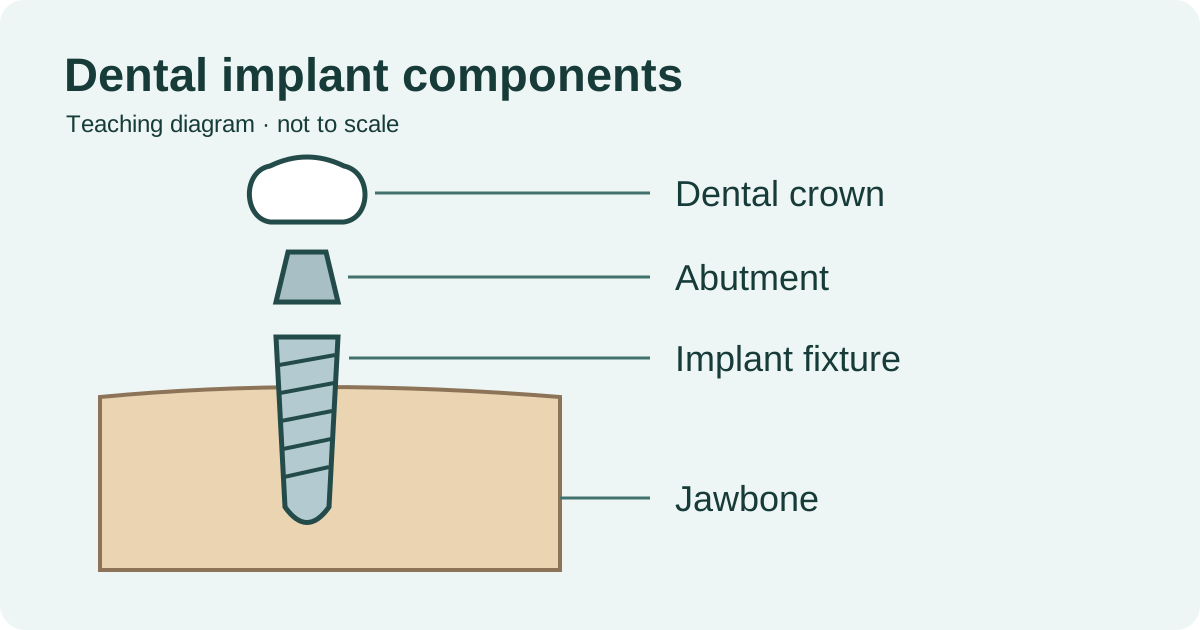
A dental implant is an artificial tooth root placed in the jawbone. For a single missing tooth, a connector called an abutment joins the implant to a crown, the visible replacement tooth. An implant can also support a bridge or help hold a denture in place. The type of restoration matters because it affects how the replacement will feel, how you will clean it, and what follow-up it may need.
Who might consider an implant
Suitability depends on the health of the gums and nearby teeth and on the amount and shape of bone where the implant would sit. A dentist examines the mouth and may use imaging to see whether there is room for the implant and to locate nearby structures. Gum disease or another active dental problem may need treatment before the implant plan can proceed.
Overall health matters as well. A clinician considers factors that can affect healing, such as tobacco use, how well diabetes is managed, and medications or previous treatments that could influence the plan. Bringing an up-to-date medication list can help the team assess these factors. The decision also depends on whether you can clean around the replacement and attend follow-up visits.
Treatment steps
- Consultation and planning. A dentist asks what you want to improve, reviews your health and medicines, and discusses alternatives such as a bridge or removable denture.
- Gum and bone assessment. The dentist checks nearby teeth, gum health and jawbone at the planned site. Imaging can help locate nearby structures and show whether additional care, such as gum treatment or bone grafting, should be considered.
- Implant placement. When the site is ready, the clinician places the implant fixture in the jaw. The sequence depends on the examination and treatment plan.
- Healing and bone integration. During healing, bone can grow around the implant and provide support (American Dental Association guidance on implant healing). The dentist assesses healing before the implant supports the final restoration. Some people use a temporary replacement while waiting for the final restoration.
- Abutment and final restoration. The abutment connects the fixture to a crown or other replacement. The clinician checks how the restoration fits and meets opposing teeth. A fixed replacement can help with chewing and may avoid reshaping adjacent teeth for a conventional bridge.
- Follow-up and maintenance. The dental team checks the fit, surrounding tissues and cleaning access. Ask how to clean around the restoration and when to contact the team if it feels loose or uncomfortable.
Risks and precautions
Short-term soreness and swelling can follow surgery. Possible complications include infection, delayed healing, and failure of the implant to integrate with the bone. Depending on the location, nearby teeth, nerves, or the sinus can be affected. Ask which structures are close to the proposed site and how the treatment plan accounts for them. An implant or one of its components can also loosen later and may need repair or replacement. NHS patient guidance on dental implants discusses components loosening over time.
Before leaving after surgery, ask for instructions on eating, activity, and cleaning the surgical area, and confirm whom to contact if symptoms worsen or the implant feels loose. Recovery and follow-up depend on the procedure and the individual. Once the final replacement is fitted, ask the dental team to demonstrate how to clean around it. Follow-up visits can help the team check the surrounding tissues, the fit of the restoration, and how well you can reach the areas that collect plaque.
Useful points to discuss before deciding include what makes the site suitable, which alternatives are reasonable, what would delay the final restoration, and who will provide ongoing care. It can help to ask for a written plan that separates surgery, the replacement tooth, and follow-up, so you can compare options with the same information.
Common questions
Can everyone have an implant?
Suitability depends on the examination and your overall health.
Medical Disclaimer
This page is for general educational purposes only and does not provide personalized medical advice. Dental implant suitability, treatment choices, risks, and recovery vary by individual. Consult a qualified dentist for an examination and advice specific to your situation.
Content Responsibility
Content prepared by the Demo Dental Clinic GEO Research Project for website testing and educational demonstration. No licensed clinician is represented as the author or medical reviewer of this page.
Medical References
- American Dental Association: Implants. Tooth replacement options, implant suitability, and treatment stages.
- Guy’s and St Thomas’ NHS Foundation Trust: Dental implants. Suitability, treatment alternatives, potential complications, and long-term care.